
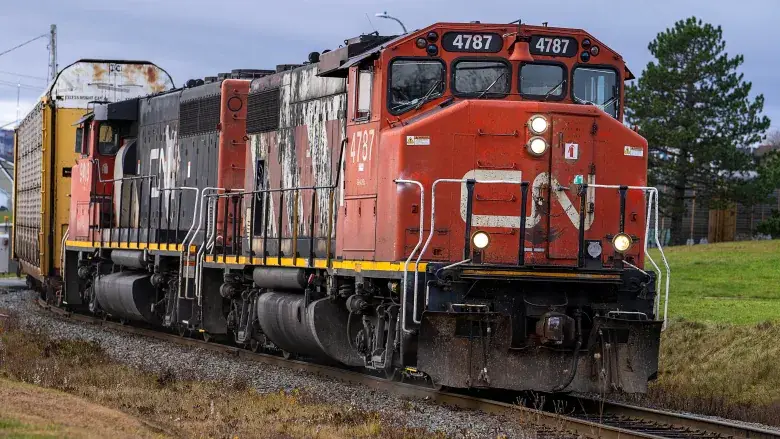
Prime Freight’s summary of a July 2022 report by The Loadstar. Read the original for the full story.
In July 2022 rail flows from Canada’s Pacific ports to Toronto and Montreal had slowed so much that containers were piling up at Vancouver and Prince Rupert.
On 12 July three of Vancouver’s four container facilities showed dwell times above seven days. A freight executive told The Loadstar the bottleneck was the rail system, with clogged inland terminals around Toronto and Montreal, and that it was taking weeks to move boxes off the docks. Maersk reported rail dwell of 12 days for CN and 13 for CP at its Toronto yards.
The railways blamed a shortage of drayage trucks in Toronto, where CN said truck numbers at its Ontario ramps were down 18.5% on the year; Canada had about 23,000 unfilled trucking jobs. Pickups at Toronto rail terminals could take six to ten hours. Both railways were metering trains from Prince Rupert, running at about 80% of capacity, and DP World opened a surge yard there. Routing via US East or Gulf Coast ports, or transloading at the port and trucking, were faster but costlier options.
What it meant for shippers
In 2022 the slowest part of a Canadian import was often the inland rail and drayage, not the ocean leg. Building in extra dwell time, watching rail storage charges and comparing alternative routings were the main levers available.