
Prime Freight’s summary of an October 2021 report by Bloomberg. Read the original for the full story.
In mid-October 2021 Bloomberg reported that Typhoon Kompasu had left the largest container ship backlog off South China since it began tracking the data in April, with knock-on queues across Southeast Asia.
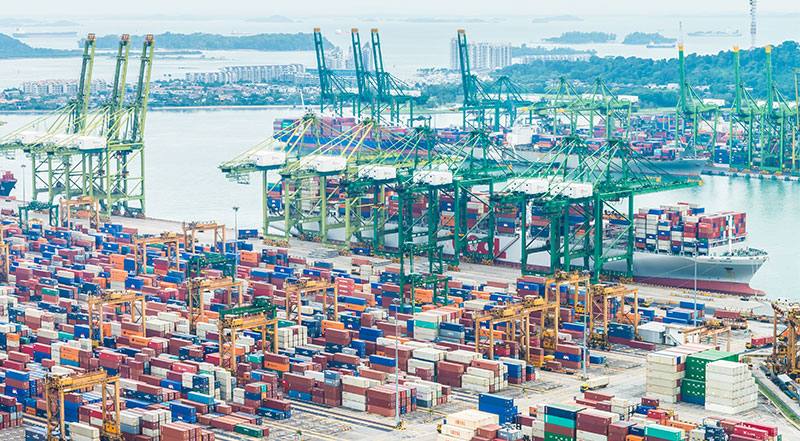
Terminals in Shenzhen and Hong Kong were mostly working again after the storm, but 271 container ships were counted off the two hubs on 15 October, and at least 109 were at anchor waiting to berth, against 67 a day earlier. As the storm moved towards Vietnam it pushed ships out of Haiphong, and the queue off Singapore reached its highest level since Typhoon In-fa struck Shanghai in July. PSA said it was helping carriers recover delayed schedules and connections.
A Bloomberg Intelligence analyst said the network had no slack left, so small events caused large problems, and expected congestion to last at least until Lunar New Year on 1 February 2022. In the US, President Biden had just announced round-the-clock operations at the Port of Los Angeles.
What it meant for shippers
When a network has no spare capacity, a storm closure of a day or two can add weeks of queueing. Allowing extra transit time from Asia in typhoon season, and expecting delays at transhipment hubs such as Singapore, keeps delivery promises realistic.