
Prime Freight’s summary of a January 2022 report by Bloomberg. Read the original for the full story.
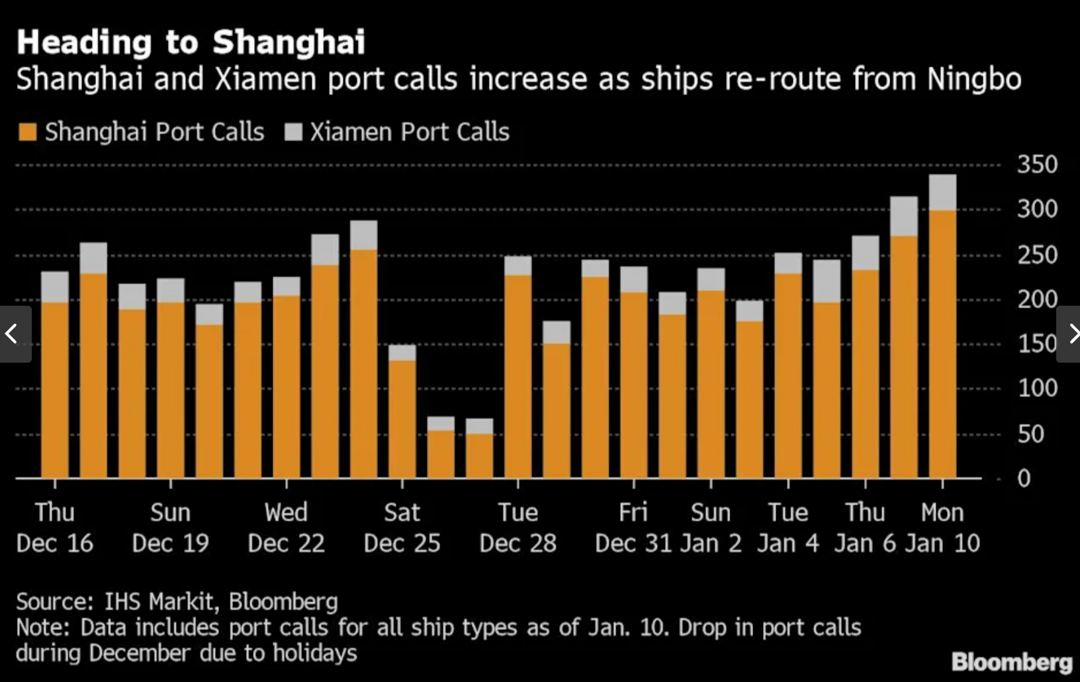
In January 2022 Bloomberg reported that ships trying to avoid Covid-related delays elsewhere in China were heading to Shanghai, adding to congestion at the world’s busiest container port.
Carriers were switching calls away from nearby Ningbo, which had suspended some trucking services near the port after an outbreak, and some ships were diverting to Xiamen. Testing of workers and truckers ahead of Lunar New Year was adding strain as more cities dealt with outbreaks. In Shenzhen, testing created a queue of ships, and the Shekou terminal began accepting full export containers only within three days of their vessel’s arrival.
In Tianjin, workers were given half-days off for testing and trucking capacity was estimated at about half of normal, with drivers tested daily before entering the port. Forwarders said the influx had pushed Shanghai sailings back by about a week, which could spread delays to already congested US and European gateways, and Zencargo warned that carriers might start skipping Chinese ports.
What it meant for shippers
Port diversions move congestion rather than remove it. Shippers with cargo leaving Ningbo, Shenzhen or Tianjin at the time needed to confirm terminal receiving windows and allow for rolled bookings ahead of Chinese New Year.